If you asked to see a computer in the 1700s, no one would point you to a glowing rectangle. They’d point you to a person. Yes, a human.
For centuries, “computer” wasn’t a gadget you bought; it was a job title, literally. A computer was a human being sitting in a quiet room with a stack of parchment, paid to do calculations all day. They were the original hardware, the original software, and the original “processing power” of civilization.
What were they computing? The same stuff that now lives in your phone’s apps and your bank’s backend.
If you were crossing the Atlantic in the 1700s, you didn’t have GPS. You had printed almanacs and navigation tables, thick books of precomputed values that helped a human “computer” turn sun-and-star observations into an estimated position. It wasn’t Google Maps, but it was the closest thing to offline map data before satellites.
If you needed to know the interest on a complex loan or the tax on a massive shipment of spices, you didn’t “open a spreadsheet.” You hired a computer to manually grind through the long division.
The word “computer” only really slid over to mean “a machine” in the late 19th and early 20th centuries, once we started building mechanical and then electronic devices to do that work instead. We did not name the machines after some abstract idea. We named them after the humans they were replacing.
And that is where things start to get ironic.
The Quiet Truth Behind “Artificial” Intelligence
Here’s the part I find oddly grounding:
Even the most impressive AI systems today are still built on layers and layers of human work. Before an AI can “sound smart,” it has to be fed oceans of human-written text, code, images, and audio. Before it can seem “helpful,” its answers are poked and prodded by human reviewers giving thumbs-up and thumbs-down, ranking responses, and flagging the weird, dangerous, or just plain wrong ones.
Its safety, tone, and usefulness don’t come from nowhere. They come from thousands of tiny human judgments that never make it into the marketing slides.
In other words: beneath the “intelligence,” there’s a lot of invisible people.
The job title computer may have moved from people to machines, but the pattern hasn’t changed as much as we like to pretend. We’re still quietly outsourcing some of our hardest thinking and judgment to humans – we’ve just buried them under new labels: “annotators,” “moderators,” “trust & safety,” “ops.”
The Tiny Etymology That Won’t Leave My Head
Here’s the little fact I can’t unsee now:
Computer originally meant a person.
It started as “one who computes” – a human worker with rules to follow and numbers to push around. Only later did it become the word for the thing on your desk.
And now, in 2026, we argue about whether “the computers” will replace us… with the quiet twist that they still rely heavily on us to exist at all.
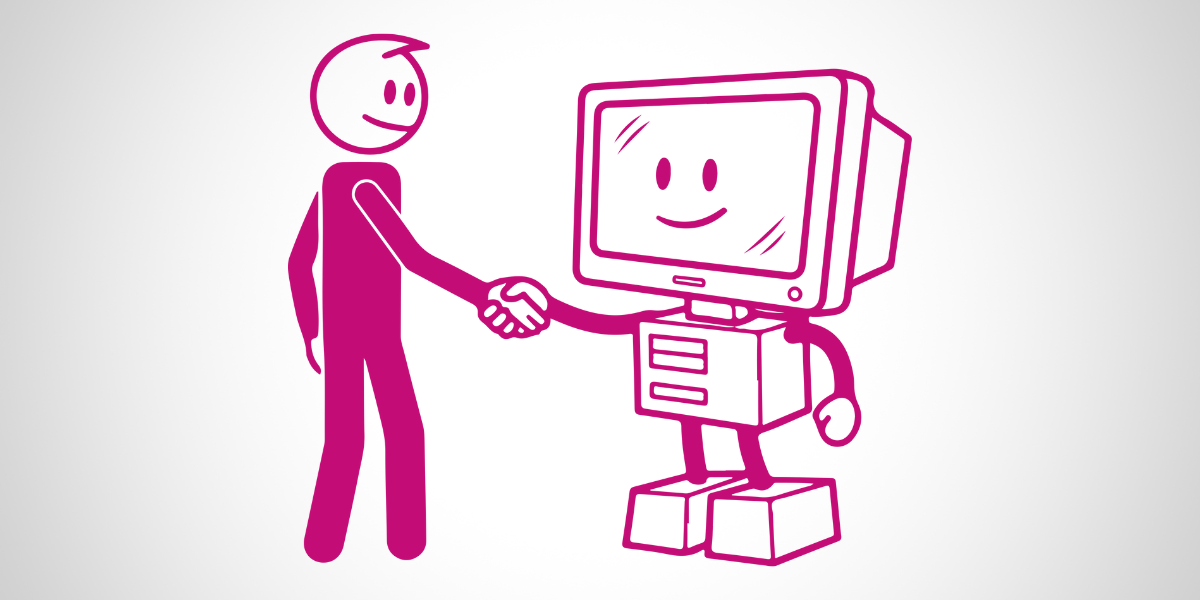
We didn’t just build machines to think like us.
We named them after ourselves.
And under the hood, they still kind of are.

Leave a Reply